

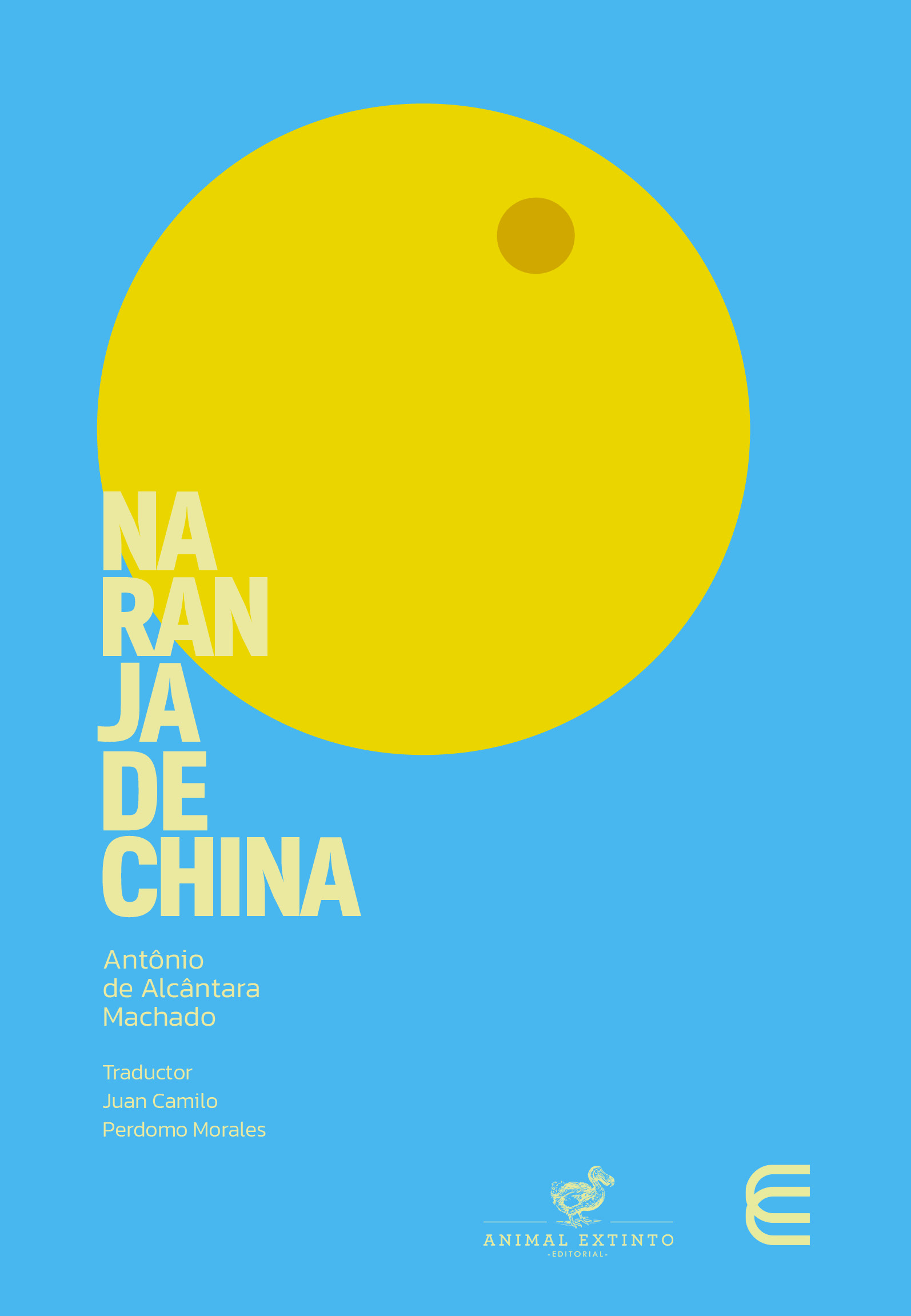
Naranja de China
The work of Alcântara Machado is born and takes on meaning in São Paulo, in the 1920s, a city in full development and progress, a cosmopolitan and multicultural metropolis where Brazilians, with all their diversity, converged with Portuguese, Italian, Spanish, Galician, and Japanese immigrants. Its value lies precisely in the portrayal of the bustling and changing reality of a city in which he explores not only its technological and urban development but also its artistic and moral dimension through everyday life.
The twelve stories that make up "Naranja de China" present everyday situations, starring common people from different social classes with whom he weaves a narrative that captures the dynamic and diverse essence of life in the burgeoning city. From the title of each story, Alcântara announces a sort of amalgamation between history and future, between literature and reality, which had already been present in his two previous works and, for example, with "Brás—Bexiga y Barra Funda," he stated, should not be taken as a work of fiction, but as a kind of real, though invented, chronicle. Considered a master of city representation and its character, a cultivator of social satire, Alcântara Machado's ability to weave literary and everyday elements in his work resonated strongly with critics and consolidated him as a unique and exceptional narrator of Brazilian modernism, a key author of Brazilian literature, and one whose presentation for the first time in Spanish in this edition fills us with immense pride.