

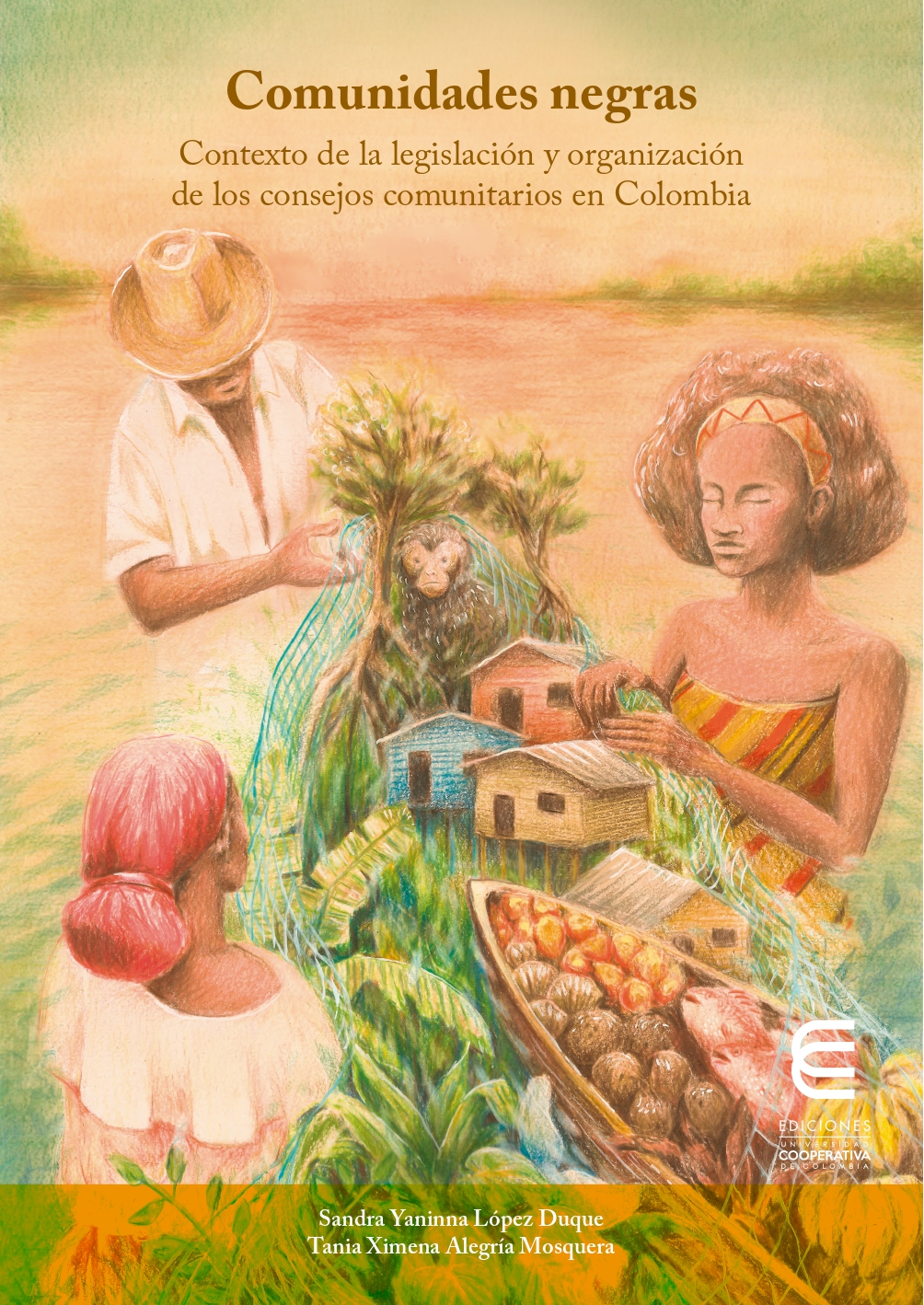
Black Communities: Current Context on Community Councils in Colombia
The arrival of European colonizers to the American continent brought about numerous political, economic, and sociocultural changes that transformed the American world and became the starting point for the widening of social gaps. One of the reasons why the Black, Afro-Colombian, Raizal, and Palenquera populations have remained in a state of neglect by the state, since the abolition of slavery in 1851, is the lack of special legislation that recognizes their ethnic diversity.
It is from the 1991 Constitution that ethnic communities, and in this specific case Afro-Colombian communities, obtain the right to political voice. Thirty years after the implementation of Law 70/1993 and Decree 1745/1995, community councils have gathered diverse experiences and achieved different results.
Therefore, this study is proposed to analyze the legislation on community councils in the country, as well as the identification of organizational processes. It is found that the situation, although not critical, is influenced by various constraints that have made the process slow and less applicable.
At the continental level, Colombia has one of the most extensive and comprehensive legislations for restoring the rights of Afro-descendant communities, with norms that encompass territorial issues, political participation, self-determination, the environment, civil and policing matters, and more.
Authors

(Author)
(Author)