

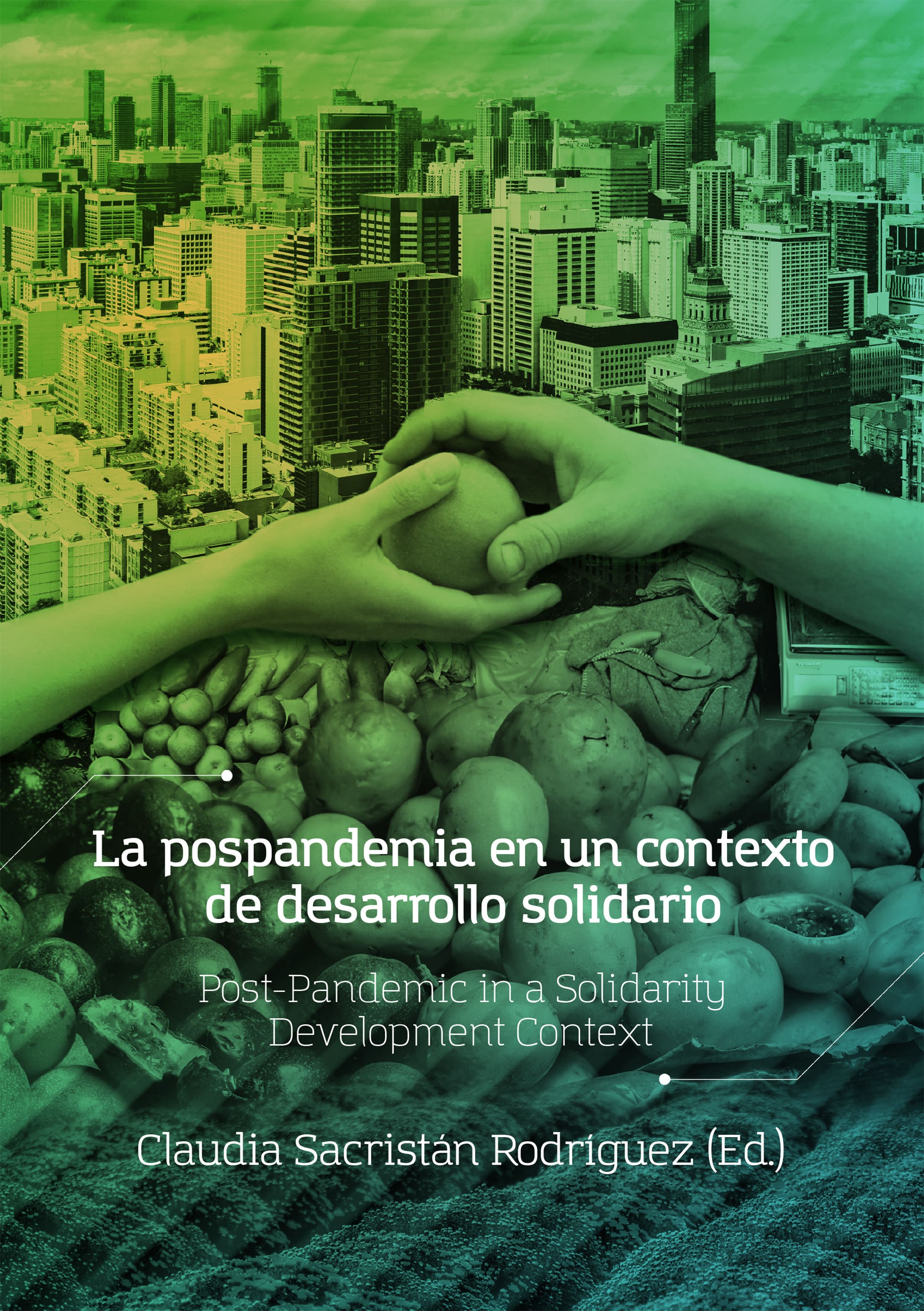
The Post-Pandemic in a Solidarity Development Context
The post-pandemic and its effects still obvious have motivated multiple discussions, making it clear that they do not want to return to a normalcy where its structural problems have not been solved by the market economy over several decades, but on the contrary they have become more acute and visible with the spread of COVID-19. In order to overcome the numerous consequences in its various dimensions, changes are promoted in the current economic model, in such a way that it allows to overcome its failures and reorient the role of the State towards a more active one in economic, social, and environmental terms, where a preponderant
role is given to collective needs, sustainable development, and everything related to the Sustainable Development Goals (SDGs). The new post-pandemic scenario raises the need to promote ties of solidarity, cooperation, and democracy through the different approaches of the social and solidarity economy and their organizations and companies. By having inclusive, democratic, participatory, supportive, and sustainable governance, they can contribute multidimensionally to closing the gaps of inequality and economic, social, cultural, environmental, and political exclusion. This is possible to the extent that public policies are designed and implemented together with economic recovery measures that include the various approaches to social and solidarity economy. In this volume, researchers from the
Cooperative University of Colombia and other universities analyze the challenges of the post-pandemic context and make some proposals.
role is given to collective needs, sustainable development, and everything related to the Sustainable Development Goals (SDGs). The new post-pandemic scenario raises the need to promote ties of solidarity, cooperation, and democracy through the different approaches of the social and solidarity economy and their organizations and companies. By having inclusive, democratic, participatory, supportive, and sustainable governance, they can contribute multidimensionally to closing the gaps of inequality and economic, social, cultural, environmental, and political exclusion. This is possible to the extent that public policies are designed and implemented together with economic recovery measures that include the various approaches to social and solidarity economy. In this volume, researchers from the
Cooperative University of Colombia and other universities analyze the challenges of the post-pandemic context and make some proposals.
Keywords:
Fair trade, COVID-19, Local and territorial development, Social and solidarity economy, Post-Pandemic, Alternative proposals, Basic income
Authors
Hans Cediel Morales

(Chapter Author)
Cooperative University of Colombia
Nadia Eslinda Castillo Romero
(Chapter Author)
Ibero-American University Puebla
Mauricio
(Chapter Author)
Cooperative University of Colombia
Ángela Castillo Burbano
(Chapter Author)
Cooperative University of Colombia
Daniela Narváez Benavides
(Chapter Author)
Universidad Centro de Estudios Superiores María Goretti (CESMAG)
Hugo Medina Chaves
(Chapter Author)
Universidad Libre
Claudia Patricia Sacristán Rodríguez
(Chapter Author)
Cooperative University of Colombia
Fernanda Caballero Parra
(Chapter Author)
Unisolutions
Anne Oduber Peñaloza
(Chapter Author)
Cooperative University of Colombia
Deicy Andrea Villarreal Rodríguez
(Chapter Author)
Cooperative University of Colombia
Massine Pricila Puerta Rodríguez
(Chapter Author)
Cooperative University of Colombia
José Obdulio Curvelo Hassan
(Chapter Author)
Cooperative University of Colombia
Martha Rocío Godoy Rodríguez
(Chapter Author)
Cooperative University of Colombia
Nubia Mireya Sandoval
(Chapter Author)
Cooperative University of Colombia
José Miguel Segura Gutiérrez
(Chapter Author)
Cooperative University of Colombia
Margarita María Rodríguez Ortega
(Chapter Author)
Universidad EAN
Olga Parra Benavides
(Chapter Author)
Andrea Carolina Casanova Mejía
(Chapter Author)
Cooperative University of Colombia
Martha Isabel Rosas Guevara
(Chapter Author)
Universidad Centro de Estudios Superiores María Goretti (CESMAG)
Douglas Eduardo Molina Orjuela
(Chapter Author)
Pontifical Xavierian University
Alexander
(Chapter Author)
Military University Nueva Granada
Claudia Patricia Sacristán Rodríguez (ed)
Cooperative University of Colombia
How to Cite
Sacristán Rodríguez, C. P. (Ed.). (2021). The Post-Pandemic in a Solidarity Development Context: Vol. Tomo 5. Ediciones Universidad Cooperativa de Colombia. https://doi.org/10.16925/9789587603460